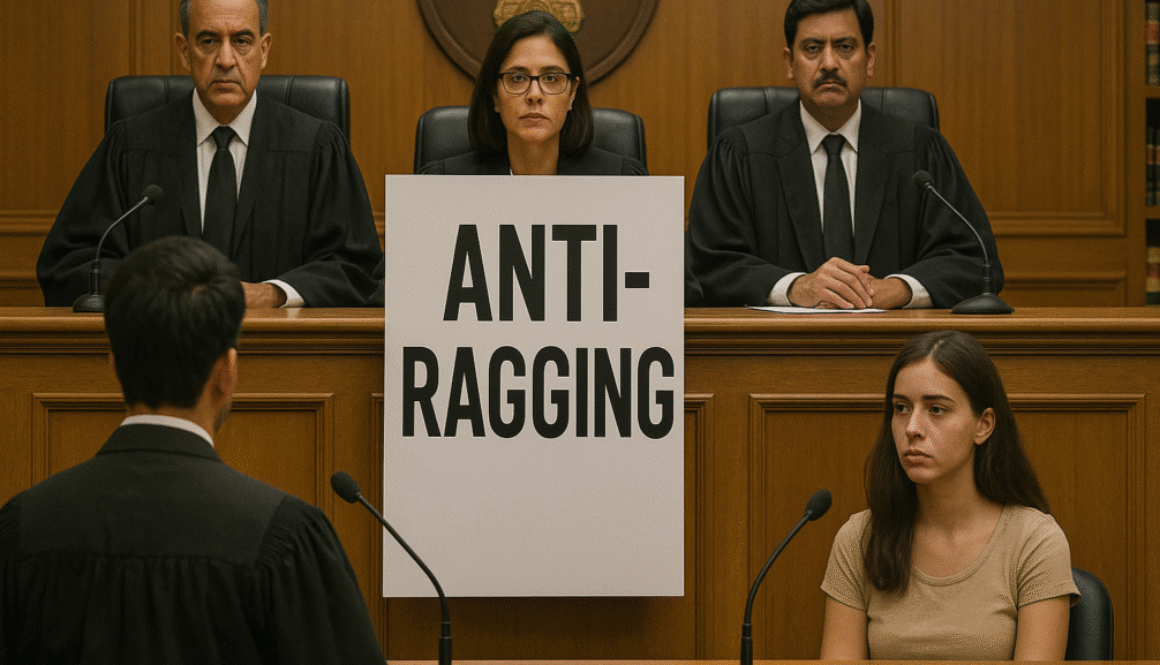
Delhi High Court Targets Anti-Ragging Failures: A Call for Reform
Introduction
On July 13, 2025, the Delhi High Court signaled its intent to initiate a suo motu Public Interest Litigation (PIL) to address the rising incidents of ragging and student suicides in educational institutions. The court criticized the University Grants Commission’s (UGC) anti-ragging framework as “grossly inadequate,” citing recent tragedies. What is the anti-ragging framework, and why is judicial intervention critical?
Background and Context
Ragging, a pervasive issue in Indian colleges, involves harassment of freshers, often leading to psychological trauma or fatalities. The UGC’s Anti-Ragging Regulations, 2009, under Section 26(1)(g) of the UGC Act, 1956, mandate institutions to form anti-ragging committees, conduct awareness campaigns, and impose penalties like suspension or expulsion. The Supreme Court’s 2007 RK Raghavan Committee report shaped these rules, emphasizing prevention and strict enforcement. Despite this, over 10 ragging-related deaths were reported in 2024–25, including a recent suicide at a Delhi medical college. The Delhi High Court’s move follows its 2023 directive to monitor compliance, highlighting persistent gaps in enforcement and institutional accountability.
Analysis
The Delhi High Court’s suo motu PIL reflects growing judicial concern over the UGC’s failure to curb ragging. The court noted that many institutions lack functional anti-ragging committees, and helplines (e.g., UGC’s 1800-180-5522) are underutilized due to low awareness. The 2009 regulations rely on self-regulation by colleges, but weak oversight allows violations to persist, particularly in hostels. For instance, a 2024 Kerala case revealed seniors forcing freshers into illegal activities, unchecked by authorities. The court’s critique aligns with broader governance issues: while the UGC can withhold funding for non-compliance, it rarely does, undermining deterrence. Students face barriers in reporting, fearing retaliation, and rural institutions often lack resources for robust monitoring. Conversely, the UGC argues that its framework is comprehensive, with 1,200 colleges penalized since 2019. However, the court’s intervention could mandate stricter audits, centralized reporting, or legal accountability for institutional heads, potentially reshaping higher education governance. For law students, this underscores the judiciary’s role in social reform and gaps in regulatory frameworks.
Conclusion
The Delhi High Court’s PIL initiative signals a pivotal moment for anti-ragging reforms. By addressing systemic failures, it could strengthen protections for students and set a precedent for judicial oversight of educational governance. As hearings progress, stakeholders await a framework that balances prevention with accountability, ensuring safer campuses across India.