Introduction
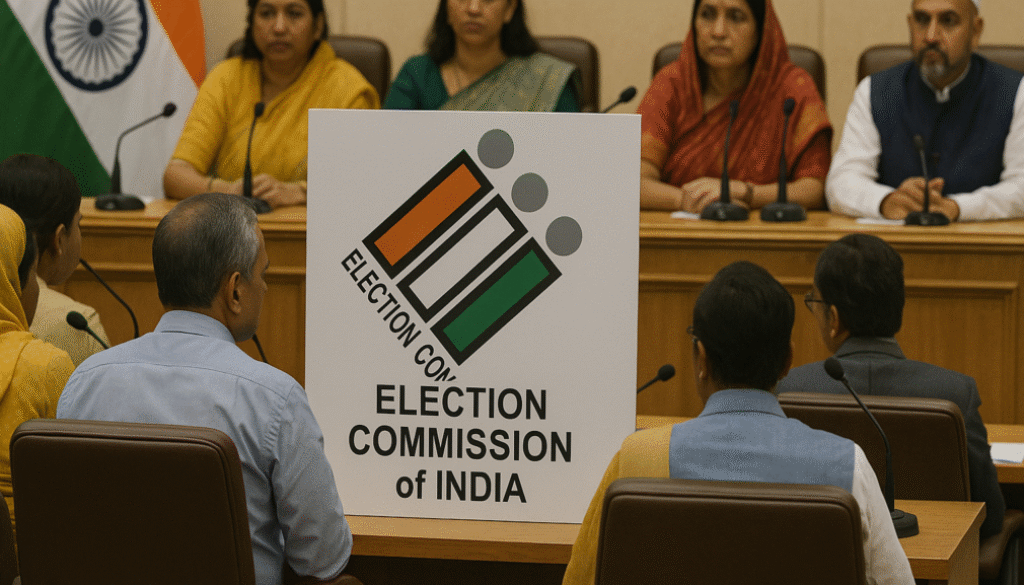
On July 11, 2025, former Chief Justices of India D.Y. Chandrachud and J.S. Khehar told a Parliamentary Joint Committee (JPC) that the Constitution (129th Amendment) Bill, 2024, enabling “One Nation, One Election” (ONOE), grants the Election Commission of India (ECI) sweeping powers without adequate oversight. While endorsing the bill’s constitutionality, they raised concerns about its implementation, particularly the ECI’s unchecked discretion. What is the ONOE Bill, and why does this matter for India’s democracy?
Background and Context
The ONOE Bill seeks to synchronize Lok Sabha and state assembly elections to reduce costs, policy disruptions, and voter fatigue. From 1951 to 1967, India held simultaneous elections, but premature dissolutions of state assemblies disrupted this cycle. The bill, introduced in the Lok Sabha on December 17, 2024, proposes amending Articles 83, 172, and 327 and inserting Article 82A to align electoral cycles. It suggests an “appointed date” post-2029 Lok Sabha polls, with simultaneous elections potentially starting in 2034. The ECI would oversee this, with powers to defer specific state elections if needed. The Kovind Committee (2023) recommended this framework, citing benefits like cost savings (elections cost ~₹60,000 crore in 2019) and governance continuity. However, the bill’s provision to curtail state assembly tenures for synchronization has sparked debate over federalism and constitutional limits.
Analysis
The Supreme Court’s concerns center on the ECI’s “sweeping powers” under the bill, which allows it to recommend deferring state elections without clear guidelines. Former CJI Chandrachud argued that the Constitution never mandated separate elections, dismissing claims that ONOE violates its basic structure, as protected by the Kesavananda Bharati judgment (1973). However, he and former CJI Khehar cautioned that unchecked ECI discretion risks arbitrary decisions, potentially undermining democratic fairness. For instance, deferring a state election could disrupt local governance without judicial oversight. Former CJI U.U. Lalit, in a February 2025 submission, warned that curtailing “substantial” assembly tenures (e.g., 30–40% remaining) could violate federalism, suggesting a phased rollout instead. Critics, including opposition leaders like Kapil Sibal, argue ONOE may favor national parties, marginalizing regional voices, as voters might prioritize national issues. Supporters, including the Law Ministry, counter that ONOE enhances political diversity by reducing election frequency, allowing new leaders to emerge. The bill’s success hinges on a two-thirds parliamentary majority, which the NDA lacks (293/543 Lok Sabha seats), necessitating broader consensus.
Conclusion
The Supreme Court’s scrutiny highlights a tension between electoral efficiency and democratic safeguards. While ONOE could streamline India’s electoral process, the ECI’s unchecked powers and federalism concerns require careful calibration. The JPC’s ongoing review, due to conclude in 2025, will shape the bill’s fate. For now, the debate underscores the need for robust guidelines to ensure India’s democracy remains inclusive and equitable.