Introduction
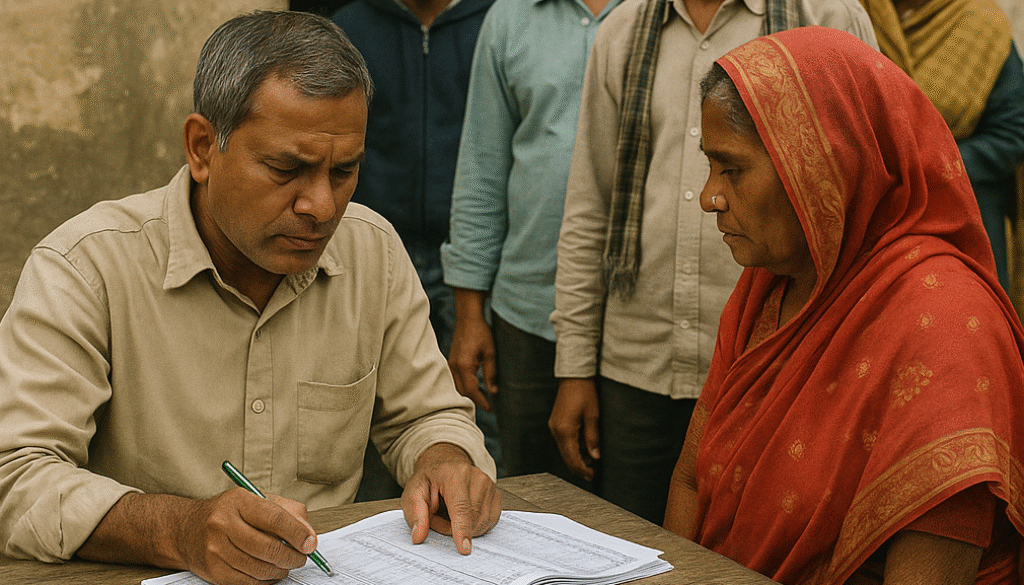
On July 10, 2025, the Supreme Court began hearing petitions challenging the Election Commission of India’s (ECI) Special Intensive Revision (SIR) of electoral rolls in Bihar, ahead of the 2025 assembly elections. The SIR, launched on June 24, requires 4.74 crore voters to submit documentary proof of eligibility, sparking concerns about disenfranchisement. Why is this revision termed “special,” and why is Bihar the focus? This article explores the SIR’s mechanics, legal basis, and implications.
Background and Context
The ECI, under Article 324 of the Constitution, oversees electoral roll preparation, governed by the Representation of the People Act, 1950. Section 21(3) of this Act allows the ECI to revise rolls “in such manner as it thinks fit,” enabling the SIR’s unique approach. Unlike routine summary revisions, the SIR combines door-to-door verification (typical of intensive revisions) with reliance on existing rolls to distribute enumeration forms—a hybrid model. The last intensive revision in Bihar occurred in 2003, leaving 4.74 crore voters (added post-2003) to prove eligibility with documents like birth certificates or Aadhaar. Bihar was chosen due to its large voter base (7.89 crore), high migration rates, and past complaints about inaccurate rolls, making it a testing ground for this rigorous exercise.
Analysis
The SIR’s novelty lies in requiring documentary proof at the enumeration stage, a departure from past practices where such proof was sought only during objections. This aims to ensure “electoral integrity” by weeding out ineligible voters, as stated by the ECI. However, petitioners, including the Association for Democratic Reforms, argue it risks disenfranchising marginalized groups—Muslims, Dalits, and migrant workers—who often lack documents. Bihar’s socio-economic challenges, with 65.58% of rural households landless (2011 Census), exacerbate access issues. The Supreme Court has urged the ECI to accept Aadhaar, voter IDs, and ration cards to mitigate exclusion, noting the “very short” timeline (forms due by July 25, draft rolls by August 1). Critics also question the timing, four months before elections, and Clause 5(b), which allows officials to flag “suspected foreign nationals,” raising fears of a “backdoor NRC.” The ECI counters that the process is inclusive, with a claims period (August 1–September 1) for corrections.
Conclusion
The SIR tests the balance between electoral accuracy and voter inclusivity. The Supreme Court’s scrutiny, set to continue on July 28, will determine if the ECI’s approach under Section 21(3) is constitutional. Bihar’s experience could shape future revisions nationwide, highlighting the need for transparent, equitable processes to uphold Article 326’s guarantee of adult suffrage.