Introduction
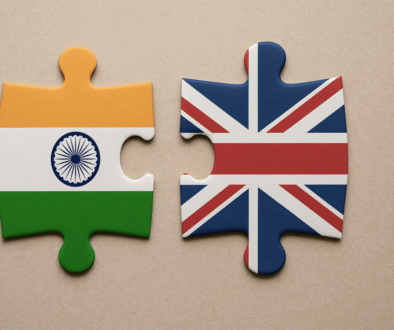
On July 20–21, 2025, Prime Minister Narendra Modi concluded a two-day visit to Nepal, meeting PM K P Sharma Oli to sign Memoranda of Understanding (MoUs) for the 750 MW West Seti hydropower project and the Raxaul-Kathmandu railway. Announced by The Indian Express on July 21, 2025, this visit, Modi’s sixth to Nepal since 2014, reinforces India’s “Neighbourhood First” policy amid China’s growing regional influence. What are the origins of India-Nepal hydropower and connectivity cooperation, why is this visit significant, and how does it shape bilateral ties?
Origins and History of India-Nepal Relations
India and Nepal share a 1,850-km open border, deep cultural ties rooted in Hinduism and Buddhism, and the 1950 Treaty of Peace and Friendship, which grants reciprocal rights like visa-free travel. Hydropower cooperation began with the 1920 Sarada Barrage agreement, followed by the 1954 Kosi and 1959 Gandak treaties, focusing on irrigation and flood control. These early agreements sparked Nepal’s concerns over India’s perceived control of water resources, as seen in the stalled 6,480 MW Pancheshwar project (1996 Mahakali Treaty). Nepal’s 83,000 MW hydropower potential remains largely untapped, with only 2,800 MW installed by 2025, driving power shortages and reliance on Indian imports (700 MW via the Dhalkebar-Muzaffarpur line).
Modi’s visits—2014 (Kathmandu, SAARC Summit), 2018 (Janakpur, Ramayana Circuit), 2022 (Lumbini), and 2024 (Kathmandu)—have prioritized energy and connectivity. The 2018 Arun-III (900 MW) foundation-laying and 2023 agreements for 10,000 MW power exports over 10 years marked milestones. The 2024 trilateral deal with Bangladesh for 50 MW exports via India further integrated regional energy markets. Border infrastructure, like the 2019 Motihari-Amlekhgunj oil pipeline and Integrated Check Posts (ICPs) at Rupaidiha-Nepalgunj (2023), has aimed to boost trade ($8.7 billion in 2024–25). However, the 2020 Kalapani border dispute strained ties, with Nepal’s inclusion of disputed areas in its map prompting diplomatic tensions.
The 2025 Visit: Key Agreements and Procedural Details
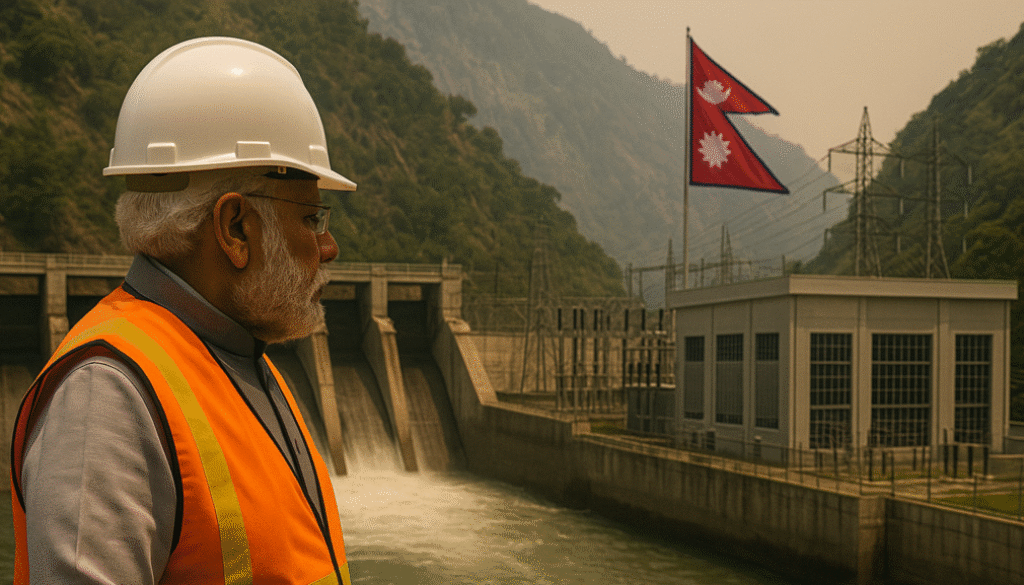
The July 2025 visit saw Modi and Oli sign MoUs for the West Seti project, led by India’s NHPC, to generate 750 MW for Nepal’s grid and export to India, and the Raxaul-Kathmandu railway, a 200-km line to enhance trade with India’s Kolkata and Haldia ports. The West Seti project, revived after China’s 2018 withdrawal, involves a $1.2 billion investment under a build-operate-own-transfer model, with completion expected by 2030. The railway, funded by a $1 billion Indian grant, aims to reduce Nepal’s trade transit costs by 30%. Additional talks addressed the Pancheshwar project’s delays (no detailed report since 1996) and flood management, with India committing ₹500 crore for embankment upgrades along the Mahakali River.
The visit built on prior engagements, including Oli’s June 2024 visit to India and Modi’s April 2025 BIMSTEC Summit meeting with Oli. It also advanced the 2023 “HIT” formula (Highways, I-ways, Trans-ways), with UPI-FonePay interoperability (March 2024) facilitating cross-border payments. Procedural hurdles, like Nepal’s parliamentary oversight demands for power trade, were addressed by ensuring the MoUs allow third-party investors (excluding Chinese firms due to India’s policy).
Broader Implications and Significance
The agreements align with India’s energy security and regional influence goals. West Seti supports India’s net-zero target by 2070, adding clean energy to its 500 GW renewable goal by 2030. The railway strengthens Nepal’s trade access, reducing dependence on China’s Belt and Road Initiative (BRI) projects like the Pokhara airport. For Nepal, hydropower exports could generate $2 billion annually by 2035, addressing its 900 MW power shortfall. The visit reinforces the Bangladesh-Bhutan-India-Nepal (BBIN) framework, promoting regional energy and trade integration.
However, historical mistrust persists. Nepal’s 2014 objections to India’s hydropower proposals, fearing water resource monopolization, echo in 2025 debates, with critics like Kanak Mani Dixit arguing that long-term power deals limit Nepal’s sovereignty. India’s downstream priorities (flood control, irrigation) contrast with Nepal’s focus on power exports, complicating projects like Pancheshwar. The Kalapani dispute, though discussed diplomatically in 2023, remains unresolved, risking public backlash. Rural Nepali communities also face marginalization from large projects, with only 10% of West Seti benefits allocated locally in 2025 plans.
Critical Evaluation: Are the Agreements Effective?
The MoUs promise mutual benefits: India gains clean energy and strategic leverage, while Nepal boosts its economy. West Seti’s revival, after China’s exit, counters BRI influence, and the railway cuts trade costs, benefiting Nepal’s $1.2 billion trade deficit. India’s $4 billion aid since 2022, including $75 million for 2023 earthquake reconstruction, strengthens trust. However, delays in Pancheshwar (29 years since inception) highlight bureaucratic and financial hurdles. Nepal’s regulatory gaps and India’s restriction on Chinese-invested power exports limit project scalability. Local opposition in Nepal, fearing environmental and social impacts, could delay implementation, as seen in the 2018 Upper Karnali protests.
For India, the agreements align with its “Act East” and “Neighbourhood First” policies, countering China’s $7 billion investments in Nepal since 2015. Yet, asymmetric power dynamics—India as the downstream hegemon—fuel Nepal’s apprehensions, as noted by Ramaswami Iyer in 2014. Both nations must prioritize transparent consultations and equitable benefit-sharing to sustain cooperation.
Conclusion
Modi’s July 2025 Nepal visit marks a pivotal step in harnessing shared water resources and connectivity for mutual growth. The West Seti and Raxaul-Kathmandu railway MoUs build on decades of cooperation, addressing energy and trade needs while navigating historical mistrust and geopolitical rivalry. For India, they bolster regional leadership; for Nepal, they promise economic gains. Yet, unresolved issues like Kalapani and project delays underscore the need for sustained dialogue and inclusive policies. As both nations aim for Himalayan heights in their partnership, balancing sovereignty, sustainability, and strategic interests remains key.