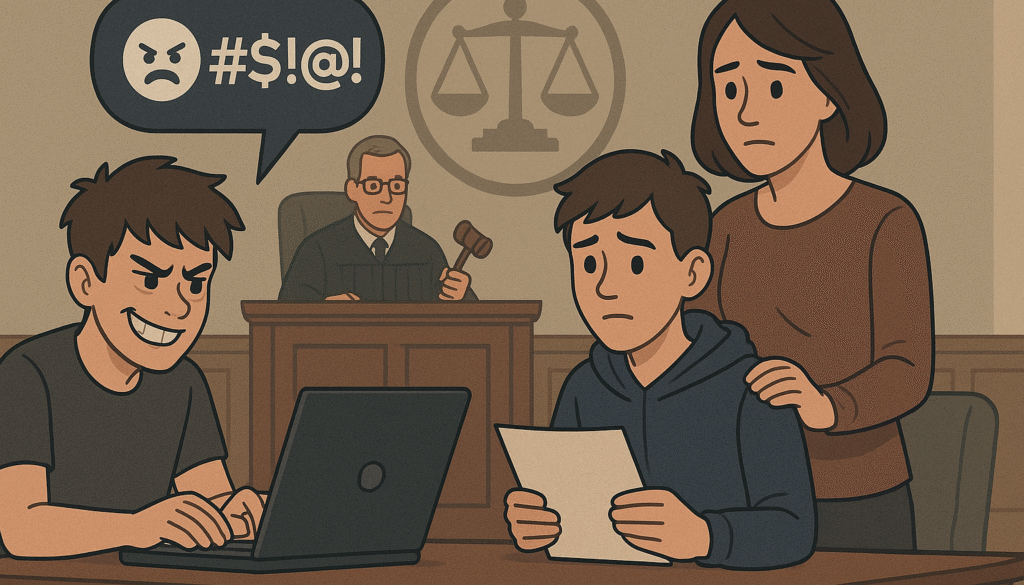
It started as a “joke” in the group chat. A snide comment, a shady meme edit, and some roast
stories flying around. Everyone laughed—except the kid who got posted. Two days later?
Complaint filed, school buzzing, parents panicking, cops rolling in. Just like that, your
“LOL” turned into “OMG what is the police doing outside?”
Here’s the thing—cyberbullying isn’t just petty online drama, it’s a full-blown legal
offence. Whether it’s a DM, fake account, or public humiliation, the law is watching. And
trust us—BNS and the IT Act aren’t just random acronyms. You mess around, and you might
not like how seriously it gets taken. Clout fades, but consequences stick—so choose your
clicks with care, and lead with kindness.
Indian laws recognize that bullying doesn’t stop at the school gate anymore—it
follows you online, one so does legal protection. Under the Information Technology Act,
2000, legal basis is provided to tackle various offences committed online. Section 66C
addresses identity theft, i.e., making use of someone else’s personal information—such as
passwords or digital signatures—without consent.
Section 66D addresses impersonation
online, e.g., impersonating another person in emails, messages or social media handles for
misleading or injurious purposes.
Section 67 forbids the dissemination or publication of
obscene or offensive content in electronic form, such as images, videos, or messages.
If you’re the victim, the Bharatiya Nyaya Sanhita (BNS), 2023 enhances the legal
framework against cyberbullying.
Section 352 covers criminal intimidation, which
encompasses threatening or frightening someone via online posts or messages. Section 336
covers defamation by communication devices, i.e., injuring someone’s reputation with false
or damaging content posted online. Additionally,
Section 356 covers general defamation, and
can apply when anything shared online—be it a post, video, or comment—harms the
reputation of another person. Thanks to these provisions, cyberbullying isn’t something you
have to just put up with—there’s a solid legal way to fight back.
If you’re under 18, there are real steps you can take. The Juvenile Justice Act, 2015
ensures that minors are treated sensitively and protected during any legal process. And if
things cross the line into sexual messages, online stalking, or grooming, the POCSO Act,
2012 steps in to offer strong protection. What’s your move? Start by collecting proof—take
screenshots, save links, note usernames. This stuff matters. Then, file a complaint through the
Cybercrime Portal (cybercrime.gov.in) or go to the nearest police station. You can do this
yourself, or with a parent, teacher, or any trusted adult. It’s private, it’s official, and it works.
Whether someone’s harassing you, spreading stuff, or faking your profile—don’t brush it off.
You’ve got rights, and there are ways to make it stop.