
National Law University, Delhi
Introduction
This is Vikramjeet, a second-year law student at National Law University, Delhi. The decision to pursue law wasn’t immediate or sharply defined. During school, I was more inclined toward subjects like psychology and sociology. However, limited subject combinations in my city made that path seem unviable. Around that time, I came across CLAT and enrolled in a coaching program, more out of chance and irresponsibility than a concrete plan.
With CLAT results uncertain, AILET became the backup, though commonly regarded as a difficult and risky gamble. I gave the exam, more out of commitment than expectation. Then came an unexpected result: AIR 27.
Campus
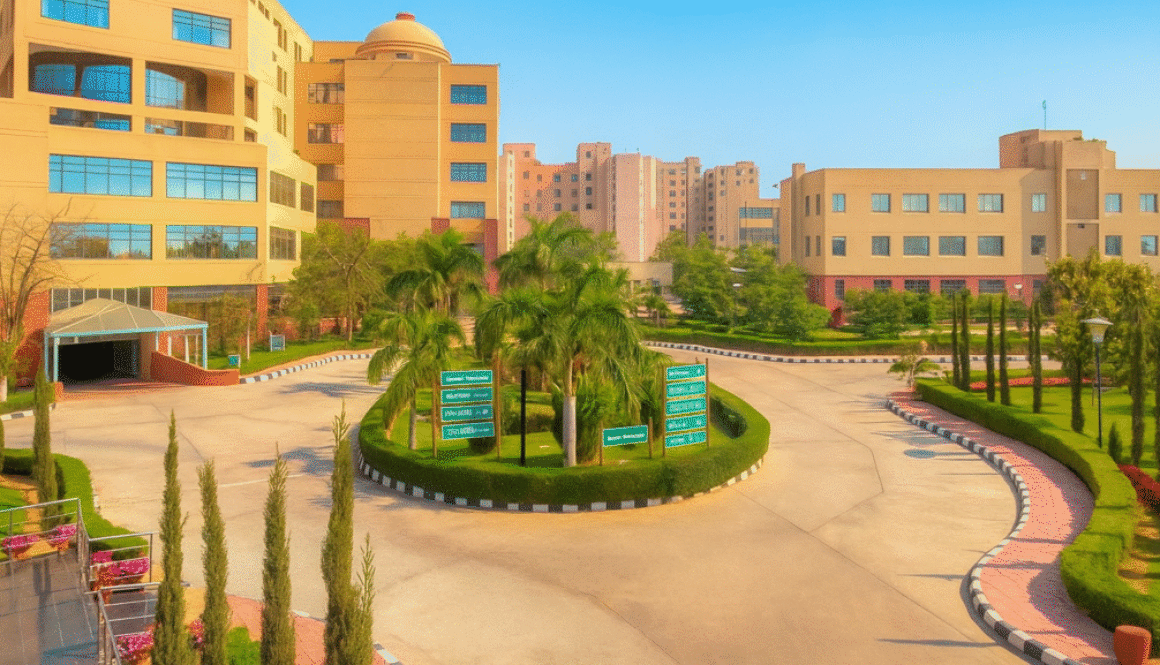
The campus at NLU Delhi presents an interesting paradox. Owing to its semicircular layout, it initially gives the impression of being expansive. But over time, one realises it’s actually quite compact. That said, most students don’t end up exploring every corner, between packed schedules and the often unkind weather, there’s little time. An exception to this is perhaps during the circulation of Glasnost, the student-run editorial zine, which tends to nudge people outdoors in search of posters and bulletin boards.
A significant portion of the campus—around 30 to 40 percent—is shared with the Delhi Judicial Academy, which limits the usable student space further. Still, for what it offers, the campus functions well. No one chooses NLU Delhi for its infrastructure, but over time, it grows on you. There’s a quiet charm to the place, the careful landscaping, the thoughtful layout of plants, and the work of the gardeners add a certain aesthetic appeal that stands out on a slow day. The buildings are well-maintained, classrooms are air-conditioned, and the Wi-Fi is reliably strong, arguably one of the best aspects of the infrastructure.
The most commonly voiced grievance is the absence of proper sports facilities. A promised expansion has been in circulation for over a decade, but so far, it remains just that-a promise.
Hostel Situation
As for the hostels, I can’t really comment on that. The peculiar position that you arrive at when you take in more kids than were accounted for in the architectural planning of the building is that half of your first year lives in the Acad Block which is supposed to house classrooms and the faculty offices. Nonetheless, the rooms in the Acad Block have an interesting feature of the highest degree privacy in the form of cubicles. A fourway partition in makeshift dorms. But overall, there is hardly anything to complain about the hostels maybe except for the mosquitoes- which can be tackled by nets (almost a survival essential in pre monsoon months).
Academics
Academics at NLU Delhi have their own rhythm. One of the first things that stood out to me after my first year was that the college could significantly improve its introductory process. The orientation, more accurately, a month-long induction stretch, felt excessive. It placed unnecessary pressure on students right at the start, often leaving them more overwhelmed than prepared.
In terms of core academics, the structure is broadly comparable to that of most other NLUs. The curriculum is rigorous, but not especially distinctive. What does stand out, however, is the university’s research centre ecosystem. A majority of senior faculty members are affiliated with or lead specialised research centres, which operate at the intersection of academia, policy, and industry. These centres provide real opportunities for students to get involved in meaningful work outside the classroom. Given the relatively small batch size, access is not just theoretical, there’s a fair and realistic chance of being part of these initiatives. I myself am currently involved with one of the newer centres on campus, and it has been a valuable part of my academic journey so far.
Conclusion
In the end, I can surely say that the rest of my years in NLUD would be a great journey which I would cherish more than I would regret.