Introduction
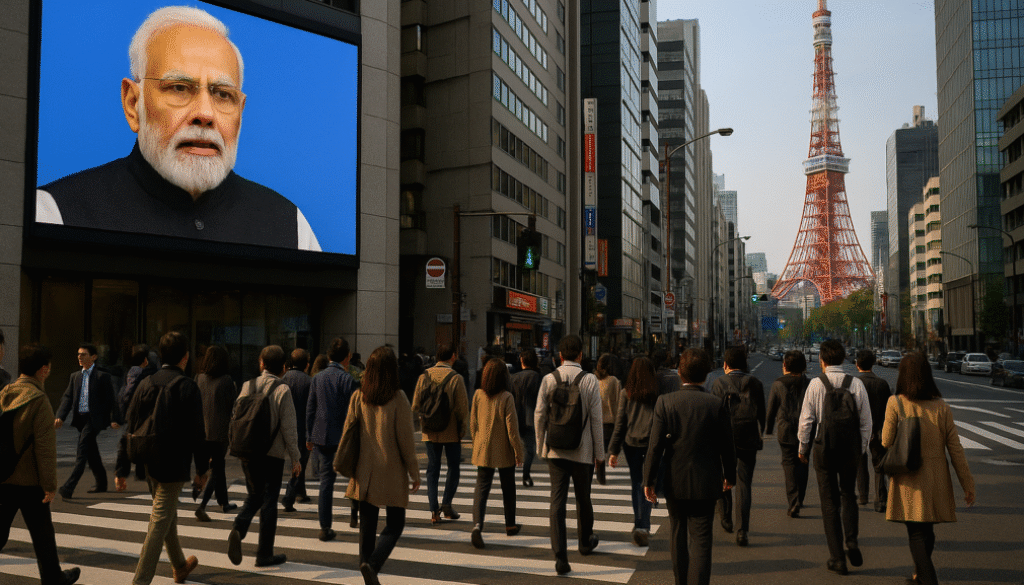
Prime Minister Narendra Modi is set to visit Japan on July 28–29, 2025, for a bilateral summit with Japanese PM Shigeru Ishiba and a Quad Leaders’ Summit with the US and Australia. The visit, Modi’s seventh to Japan since 2014, emphasizes technology transfers, defense cooperation, and Indo-Pacific security amid China’s growing regional influence. What are the origins of India-Japan relations and the Quad, why is this visit pivotal, and how does it shape Asia’s geopolitical and technological landscape?
Origins and History of India-Japan Relations
India-Japan ties, rooted in cultural exchanges via Buddhism since the 6th century, gained strategic depth post-World War II. The 1952 Treaty of Peace between India and Japan marked formal diplomatic relations, followed by Japan’s economic aid for India’s Five-Year Plans (e.g., ₹14.4 billion for the 1970s Bhilai Steel Plant). The 2000 Global Partnership declaration by PMs Yoshiro Mori and Atal Bihari Vajpayee elevated ties, culminating in the 2006 Strategic and Global Partnership under Shinzo Abe. Modi’s visits—2014 (Tokyo, defense agreements), 2016 (bullet train MoU), 2018 (AI cooperation), and 2022 (Quad Summit)—have deepened collaboration. Japan’s $42 billion investment pledge (2022–2027) supports projects like the Mumbai-Ahmedabad High-Speed Rail (MAHSR), with 80% funding via low-interest loans.
The Quad, comprising India, Japan, the US, and Australia, emerged from the 2004 Tsunami Core Group, formalized as the Quadrilateral Security Dialogue in 2007 by Abe. Revived in 2017 amid China’s Belt and Road Initiative (BRI), the Quad focuses on a “free, open, and inclusive Indo-Pacific.” Past summits (e.g., 2022 Tokyo, 2024 Delaware) addressed maritime security, undersea cables, and health (Quad Cancer Moonshot, 2024). Modi’s 2023 Japan visit for the G7 Summit, where he met Ukrainian President Volodymyr Zelenskyy, underscored India’s neutral stance on global conflicts, balancing Japan’s pro-Western alignment.
The 2025 Visit: Key Objectives and Procedural Details
The July 2025 visit includes a bilateral summit with Ishiba, who assumed office in October 2024, and a Quad Summit, likely attended by US President Donald Trump and Australian PM Anthony Albanese. The bilateral agenda prioritizes technology transfers, including semiconductors and AI, building on the 2024 India-Japan Semiconductor Partnership. Japan’s NEC and India’s IT Ministry will finalize a $500 million chip fabrication deal, targeting India’s $10 billion semiconductor incentive scheme. Defense cooperation, a focus since the 2014 2+2 Dialogue, will advance joint exercises (e.g., Malabar 2024) and co-production of drones, with Japan easing arms export rules in 2025.
The Quad Summit will review initiatives like the Indo-Pacific Maritime Domain Awareness (IPMDA) and the 2025 Maritime Initiative for Training (MAITRI), hosted by India. Discussions will address China’s actions in the South China Sea, where 90% of undersea cables face risks, and finalize the Quad Partnership for Cable Connectivity (2023). The visit follows Modi’s February 2025 US trip, where he invited Trump to India’s 2025 Quad Summit, signaling India’s growing leadership. Procedural details include MoUs for 5G infrastructure and green hydrogen, with Japan committing ₹1,000 crore for India’s renewable energy grid.
Broader Implications and Significance
The visit strengthens India’s role in the Indo-Pacific, countering China’s $1.2 trillion BRI investments. Japan’s technological expertise aids India’s self-reliance goals (Atmanirbhar Bharat), with 1,400 Japanese firms in India creating 500,000 jobs by 2024. The MAHSR, 50% complete by 2025, will cut Mumbai-Ahmedabad travel time to two hours, boosting economic corridors. Quad initiatives like IPMDA enhance India’s maritime security, critical for 90% of its $1.2 trillion trade by sea. India’s neutral stance on Russia-Ukraine, reiterated in Modi’s 2022 “not an era for war” remark to Putin, positions it as a mediator, balancing Japan’s G7 alignment.
For Japan, the visit aligns with Ishiba’s “Asian NATO” vision, though India avoids formal alliances. The Quad’s focus on non-military issues—climate, health, technology—broadens its appeal, with India’s $7.5 million HPV vaccine contribution (2024) exemplifying cooperation. However, India’s 2023 G20 presidency and refusal to isolate Russia highlight its strategic autonomy, a point of divergence with Japan.
Critical Evaluation: Are the Agreements Effective?
The visit’s focus on technology and security promises mutual benefits. Japan’s chip expertise supports India’s $100 billion semiconductor market goal by 2030, reducing reliance on China (60% of global chip supply). The Quad’s MAITRI and cable connectivity initiatives strengthen maritime resilience, vital for India’s 7,500-km coastline. Japan’s $42 billion investment fuels India’s $1 trillion infrastructure push, with 20% allocated to renewables by 2027. Modi’s diaspora engagement (40,000 Indians in Japan) fosters cultural ties, as seen in his 2022 Tokyo interactions.
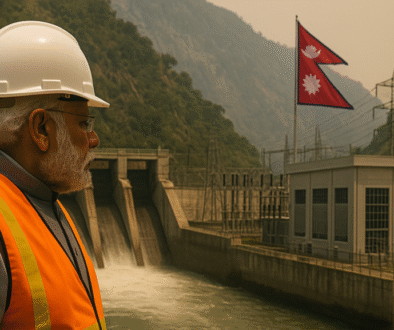
However, challenges persist. The MAHSR faces land acquisition delays, with only 65% acquired by 2025, pushing completion to 2028. India’s cautious Quad stance—emphasizing “not against anyone” (Modi, 2024)—limits military integration, frustrating Japan’s defense goals. China’s $200 billion annual trade with India (2024) complicates anti-China posturing. Nepal’s 2025 hydropower deals with India, signed days earlier, highlight competing regional priorities, as China’s Pokhara project looms. Critics argue that technology transfers risk dependency, with Japan’s strict IP rules limiting local innovation.
Conclusion
Modi’s July 2025 Japan visit marks a milestone in India’s strategic and technological ascent. By deepening India-Japan ties and advancing Quad goals, it counters China’s regional dominance while boosting India’s economic and security frameworks. Yet, delays in projects like MAHSR, India’s strategic autonomy, and China’s economic leverage pose hurdles. As India hosts the 2025 Quad Summit, balancing bilateral gains with regional dynamics will shape its global role. This visit underscores a partnership rooted in history but navigating modern complexities, vital for a stable Indo-Pacific.