Background to the Present Context
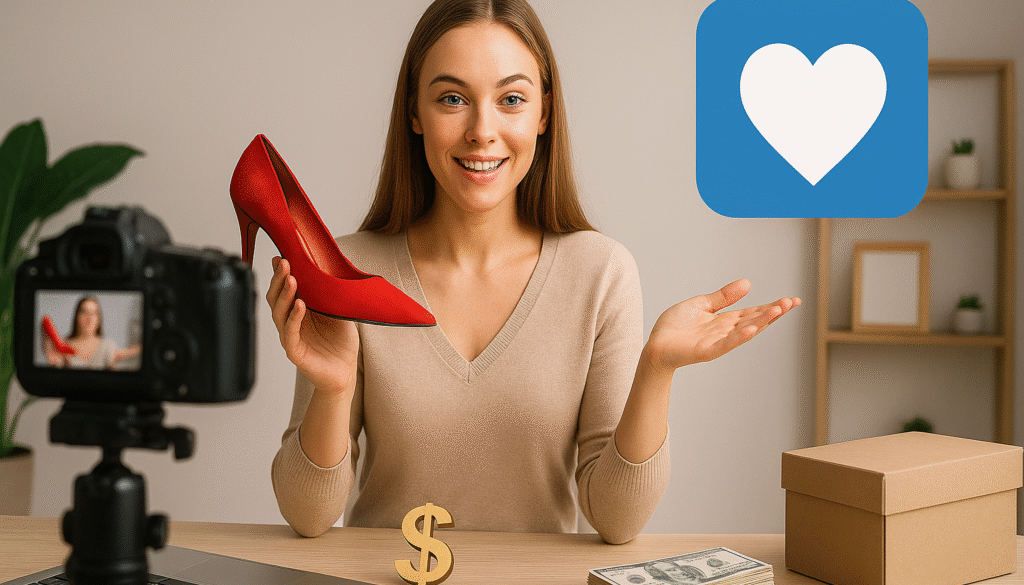
In today’s digital age, social media platforms like Instagram reels, TikToks, Youtube shorts and Facebook have become irreplaceable parts of our daily lives. Everybody is on social media, even the platforms are divided based on the individuals they target. In India, predominantly, Facebook is dead among teenagers and young adults while older populations don’t use platforms like TikTok or Instagram. Social media marketing is at an all time high as of September of 2025, companies are investing more and more capital into social media marketing; with their strongest weapon being influencers. I’ll share a personal anecdote, my brother started going to the gym and was eager to satisfy his diet and so he needed whey protein, he emailed a ‘whey giant’ of the market that he was going to start a journey as an influencer and they sent him a 2kg tub worth a lot of money, no investigations, no questions, nothing. The return-on-investment is very high in these cases.
To start, let’s define key terms. Capitalism, as per Karl Marx’s ideas in sociology, is an economic system based on private ownership of machinery, profit maximization and turning everything, including human relationships, into sellable goods. Social media platforms are capitalist tools at their core, owned by big corporations like Meta (Facebook) or ByteDance (TikTok).They are intrinsically designed to generate revenue through ads, data sales, and user engagement.
Influencer culture refers to content creators who use their personal brand to actively or passively influence their followers, often through sponsored content. From a sociological lens, thinkers like Herbert Marcuse from the Frankfurt School would see these as part of a “one-dimensional society,” where technology reinforces dominant ideologies rather than challenging them. Yet, Antonio Gramsci’s concept of hegemony suggests that even in capitalist structures, counter-hegemonic movements can arise. This duality forms the core of my discussion.
Social Media and Influencer Culture as Instruments of Capitalism
There’s no denying that social media platforms are deeply embedded in capitalistic ways. More than anything they are the ultimate tools for the brand’s reach given their ability to proliferate information globally. They also operate as data-harvesting machines, collecting user information to fuel targeted advertising. Every scroll, like, or comment feeds algorithms that keep users hooked, increasing, day by day the time spent on the platform which converts directly to ad revenue. For example, Facebook’s business model relies on selling user data to advertisers (who use this data to run ads of their own), turning personal interactions into commodities. Even small interactions like scroll-time, repeat-rate, positive and negative engagement, etc, in large numbers, add up to meaningful, studiable datasets which are then analysed by algorithms to target your mindset specifically and more specifically each time. In behavioral terms, this taps into psychological patterns like dopamine hits from prolonged use, encouraging addictive use that benefits platform owners. Influencer culture amplifies this. Influencers, often starting as everyday people, build audiences by sharing “relatable” lifestyles, but this relatability is often a mask for profit and even if it’s not, these influencers subconsciously affect our thought process and our own interpretation of social constructs. Take beauty influencers on Instagram: they promote makeup brands through affiliate links, earning commissions per sale. This seems to be an innocuous, humble way of showing “your support” to them; turning out to be, in the grand scheme of things, a force of the market pushing buyers into a subconscious state of unwanted buying. Behavioral patterns here include FOMO (fear of missing out), which drives impulse purchases. A 2023 study by the Pew Research Center found that 54% of young adults in the U.S. have bought something after seeing it on social media, highlighting how influencer marketing fuels capitalist consumption.
Expanding on my point earlier about algorithms; platforms enforce capitalist hierarchies through algorithms. Users are fed content that reinforces personal ideals, which creates echo chambers, creating a mentality of ‘social belonging’ which is obviously not true and is a mathematical, statistical calculation of the algorithm looking to show you the next best ‘sneakers you can buy’ because you are a ‘sneaker-head’.In India, for example, platforms like YouTube have birthed influencers promoting everything from fast fashion to crypto schemes, often targeting impressionable youth in a growing economy.
From my personal view, as someone who’s scrolled through endless reels and shorts, influencer culture feels like a slick extension of advertising even if it is not done so intentionally, majority of the content does not deliberately but at a subconscious level influence your mind, it warps your mind a way that makes you want to wear the same watch your favourite influencer wears. On the deliberate side, think of how TikTok’s “For You” page pushes viral challenges that subtly incorporate brand tie-ins, like dance trends with branded music. This isn’t organic; it’s engineered for profit, shaping social behaviors toward unwanted, constant consumption.
The Potential for Social Resistance
That said, there is potential for social resistance in social media platforms, which stems from its very nature. “don’t let the algorithm control you, control the algorithm” is a widely used phrase in the intellectual internet forums like reddit. If the population is educated about how the algorithm works, they form the ability to rationally develop their feeds in a way that positively influences them. The trick is actively being aware of the subtle capitalistic influences that are thrown your way and to diligently avoid them. Social media also serves as a powerful tool for social resistance via democratizing information and giving the traditionally repressed a platform to express. Unlike traditional media which is controlled by elites, This reflects network theory in sociology, where loose connections (weak ties) facilitated by platforms can spark widespread movements, through viral sharing, where outrage or solidarity spreads rapidly.
Influencer culture, too, can pivot toward resistance. “educated” influencers who spend time creating quality content often develop a loyal, educated follower base which turns the blind one-way relationship between a creator and his audience to a symbiotic one, where both enjoy a space for open, rational discussion. Influencers like UnfilteredBySamdish, Samay Raina and various other artists work toward expanding the audience’s horizons, pushing society towards a more inclusive, free space, empowering the audience. Sociologically, this embodies Jurgen Habermas’s “public sphere,” where rational discourse can occur online, fostering resistance. Hashtags like #MeToo empowered survivors of sexual harassment, who were conventionally suppressed to share stories, leading to real-world changes like policy reforms and scrutiny of powerful figures. This counters traditional capitalistic values by highlighting exploitation in supply chains and labor and speaking against the Bourgeoisie-class.
However, this resistance has limits. Platforms can and will usually censor content on their own, and by the commands of the ruling parties (state). Brands “woke-wash” by sponsoring progressive influencers, turning resistance into profit. Algorithms amplify divisive content for engagement, fragmenting society.
In my opinion, while resistance is possible, it’s often eclipsed by capitalism. Influencers starting as activists shift to sponsored content for sustainability, diluting their message. Yet, this shows social media’s dichotomy, a capitalist instrument that can be repurposed and vice versa.
Conclusion
Weighing both sides, social media and influencer culture are instruments of capitalism to a large extent, because their core design prioritizes profit through data, ads, and consumerism. They shape behaviors toward endless scrolling and buying, reinforcing inequalities. However, they can serve as tools for resistance when users utilize them for education and awareness. The key is the approach: passive consumption feeds capitalism, while active, critical engagement promotes resistance.
This reflects a broader pattern in modern society, where technology both alienates (Marx’s alienation theory) and connects. To maximize resistance, we need audience to be digitally literate, teaching people to spot manipulations and perhaps regulatory reforms, like data privacy laws in the EU’s GDPR.
Ultimately, I see influencer culture as a crucial capitalist instrument in today’s times, glamorizing consumption. But hope lies in its resistive potential. If we use it wisely, it could challenge the very system it upholds. The challenge is navigating this double-edged sword without getting cut.